
We spoke with Carlo Sem, Project Director at Saipem, a leading engineering company with decades of experience in delivering complex energy infrastructure worldwide. Today, Saipem is applying this expertise to a new generation of low-carbon projects, with the ambition to be a major player in decarbonisation.
Saipem is Stockholm Exergi’s engineering, procurement and construction partner, helping to build Beccs Stockholm, one of Europe’s leading carbon removal infrastructures.
For Carlo, the project also marks a personal transition quoting Stockholm Exergi Project Director: “I spent 30 years of my career pumping CO₂ out of the ground, and now I’m going to push it back into the ground.”
Applying energy-sector experience to build a new industry
“Saipem is strategically moving into the growing carbon management industry in Europe and globally. We have a distinctive, industrial skillset, working along the value chain of various energy sources. We see an opportunity to apply that expertise to help build this new industry. Beyond carbon capture, Saipem brings expertise across the CO₂ value chain, from technology and engineering to transport infrastructure, including offshore pipelines and vessels designed to carry CO₂, as well as solutions supporting permanent storage.”
“Beccs Stockholm is significant because there are very few carbon removal projects of this size and complexity.”
It is a first-of-a-kind project on a scale and an opportunity to demonstrate how this kind of infrastructure can be delivered.
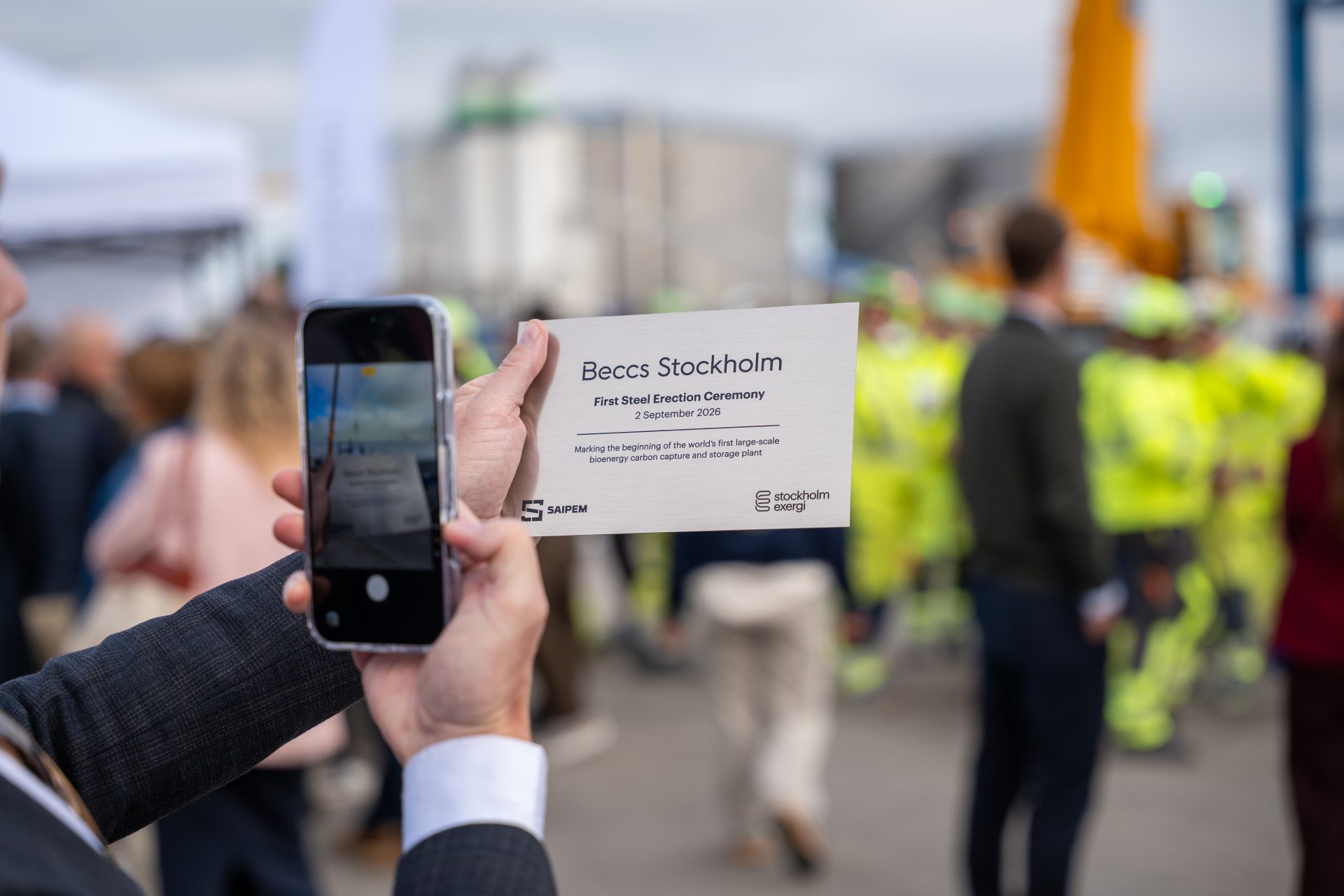
The entire Low Carbon Energy industry is watching this project
Beccs Stockholm combines new carbon capture infrastructure with Stockholm Exergi’s existing biomass-based combined heat and power plant at Värtan, connecting into a wider value chain for CO₂ transport and permanent geological storage.
The industry is looking at it with interest to see how it progresses because a project like this can demonstrate how large-scale carbon removal infrastructure can be delivered in practice.
“It can become a benchmark for the industry.”
A complex, first of a kind engineering project that is on track to deliver
There is a lot of complexity in a project like this.
“We are integrating new carbon capture infrastructure into an existing, operating facility, with major construction and engineering work taking place around it.”
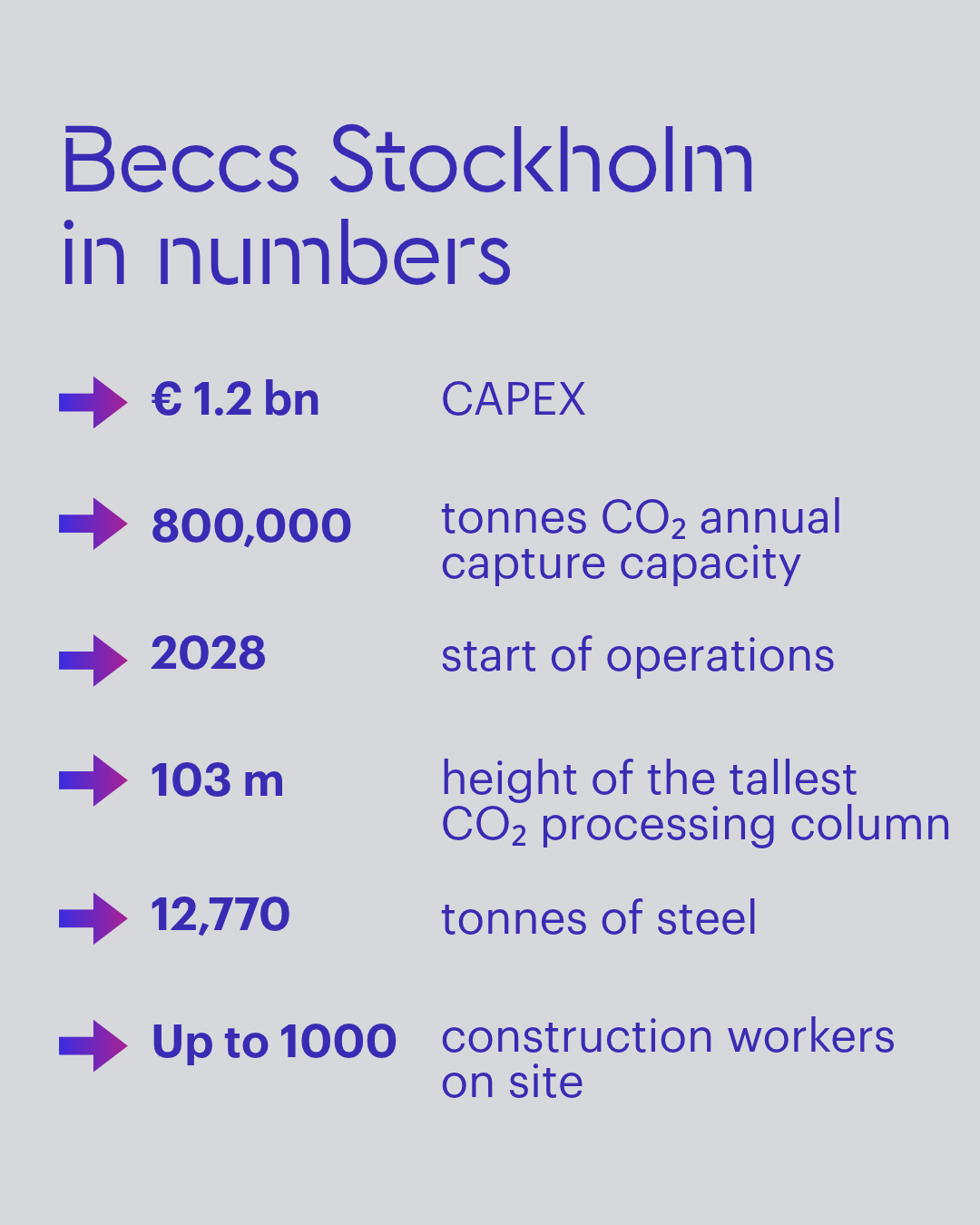
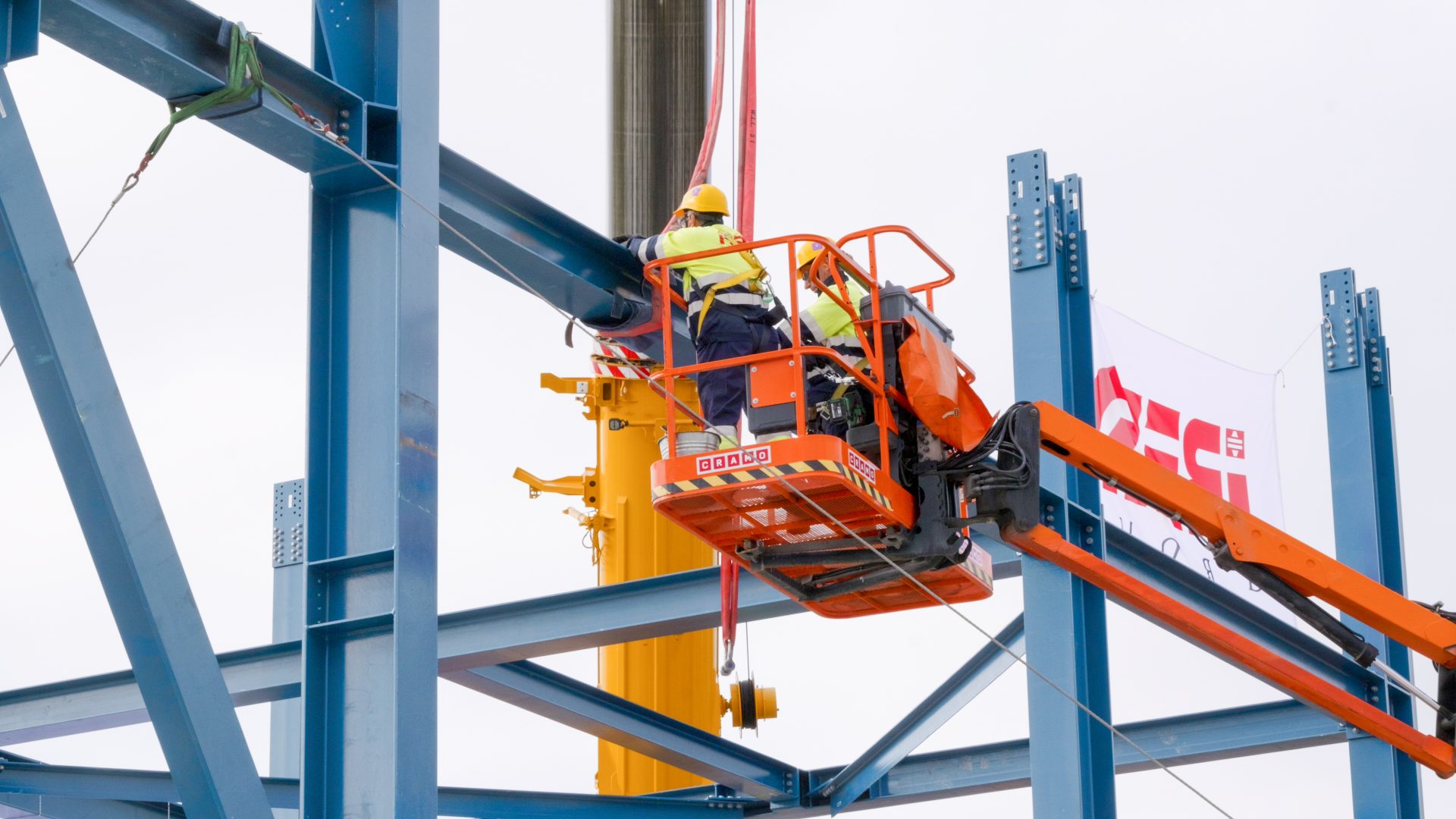
There are multiple contractors, suppliers and stakeholders whose work all needs to come together. Despite this complexity, the main project milestones identified so far have been met. The foundations have been substantially completed, the bridge bringing the flue gas from the chimney has been installed, and Saipem installed the first steel structure of the Carbon Capture and liquefaction units.
Project management built on collaboration, transparency and openness
A big part of the project’s successful delivery is based on the way Stockholm Exergi manages the many interfaces.
From the beginning, they have worked to engage all parties, establish a common vision and make sure all the contractors understand the final project’s objective. Everyone is focused on shared goals, creating a different kind of relationship. It is less transactional and more partnership.
“Here, I found an approach that is more of a partnership. We are in it together.”
The success of a first-of-a-kind project is not only about technology. It is about creating an environment built on trust, transparency, fairness and shared objectives among all project partners.
We know our respective roles and there are clear rules and boundaries on our specific scope of work, but there’s also a willingness to work together to deliver the project as a whole. When an issue arises during execution, we discuss it openly and find the best way to solve it. That openness is especially important on a project of this complexity.
Fairness, openness and transparency enable us to address and solve any specific challenge that arises during execution.
And that collaborative approach extends beyond the immediate project team. For example, Stockholm Exergi has worked with the nearby port authorities to make space available for storing construction materials before installation.
Building a new carbon removal industry in Europe
We are part of building a new industry.
“We are not simply delivering a project. We are helping to build a new carbon removal industry. I think Beccs Stockholm can provide a model for how large-scale carbon removal infrastructure can be delivered, replicated and scaled across Europe.
Targets are important, but they need to have facts and concrete action behind them. Projects like this turn ambition into real infrastructure and make large-scale carbon removal achievable.”
Turning carbon removal targets into infrastructure
According to Johan Börje of Beccs Stockholm, companies looking to secure high-quality permanent carbon removal are increasingly looking for this kind of delivery experience. He says:
“In our discussions with corporate boards, we see they require more than promising technologies. They want evidence of engineering capability, infrastructure and partnerships to turn those technologies into projects that can operate at industrial scale.”
Beccs Stockholm is designed to begin delivering permanent carbon removals from 2029. And the engineering partners responsible for delivering the project are seeing the infrastructure take shape on the ground. As Carlo puts it:
“After years of design and planning, we are now seeing the infrastructure take shape. You can literally see things materializing.”
To find out more about Beccs Stockholm and securing access to permanent carbon removals from 2028 contact us at sales@beccs.se


