
BECCS is a carbon removal process that uses biomass from plants that have already absorbed CO₂ from the atmosphere. That biomass is used to generate energy and the resulting CO₂ emissions are captured and permanently stored
Our carbon removal value chain
From sustainably sourced local biomass to permanent geological storage, at BECCS Stockholm we are building on existing infrastructure to deliver carbon removal at industrial scale.
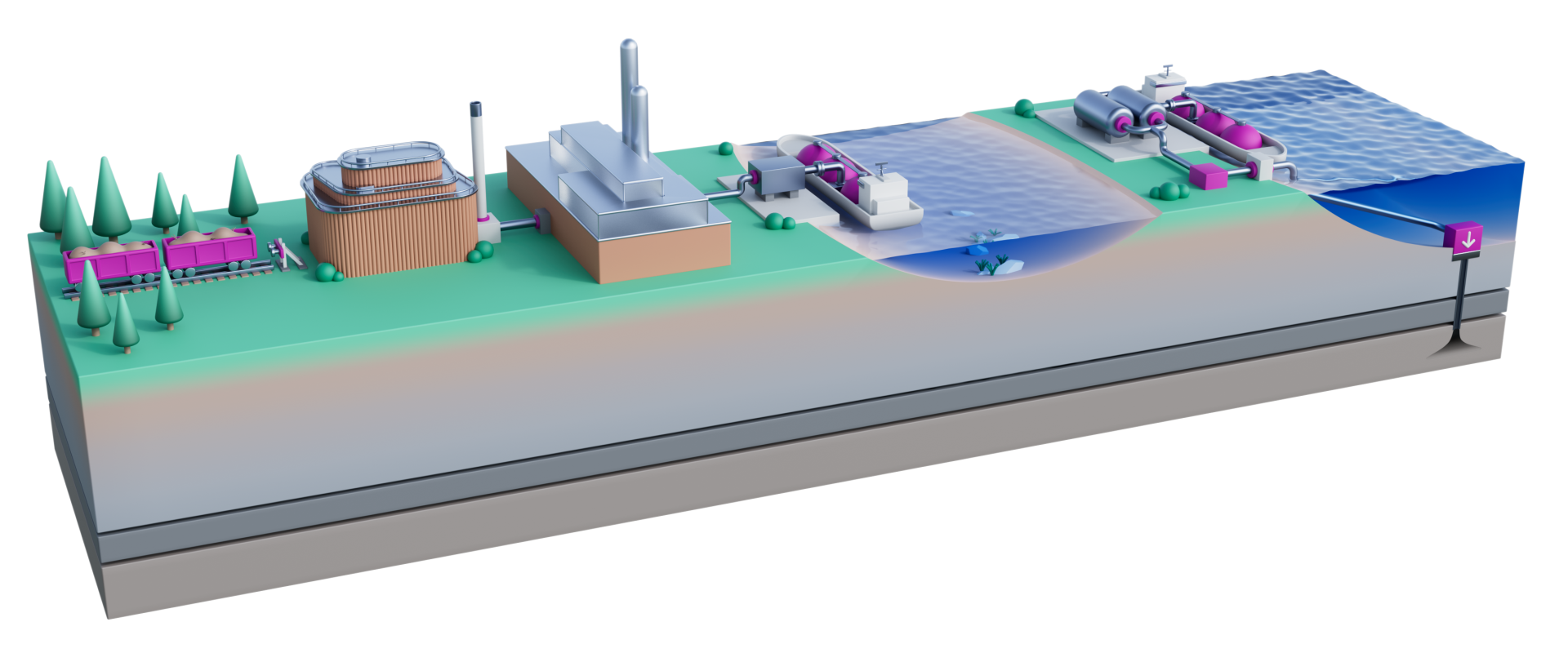
Sustainably sourced local biomass to renewable energy
Today, Stockholm Exergi already uses residues from sustainably managed Swedish forests to generate renewable heat and power at our KVV8 facility – Europe’s largest biomass-based Combined Heat and Power plant.
Our biomass sourcing meets strict sustainability criteria aligned with the EU’s Renewable Energy Directive (RED III), with no additional biomass required for carbon capture.
Capturing CO₂ to create negative emissions
By integrating carbon capture technology into our existing biomass-based combined heat and power plant, we capture the biogenic CO₂ that would otherwise be released during energy production. The CO₂ originally absorbed by the trees is permanently removed from the natural carbon cycle, enabling us to deliver negative emissions at industrial scale. Heat generated during capture and liquefaction is recovered and reused in Stockholm’s district heating network.
Transport and permanent storage
Located at the Värtan combined heat and power plant in Stockholm, BECCS Stockholm benefits from direct access to the city’s Energy Port.
The captured CO₂ is purified and liquefied for efficient transport (liquified CO₂ takes significantly less volume than gas), then transferred to the port for shipment to Norway. It is injected into geological formations deep beneath the North Sea seabed for permanent storage, designed to keep it securely contained for thousands of years. Through a 15-year commercial agreement with Northern Lights, transport and storage services are secured.
The role of carbon removals
Reducing greenhouse gas emissions remains the priority for tackling climate change. But some emissions, particularly in hard-to-abate sectors, will remain. Permanent carbon removals plays a complementary role by removing CO₂ from the atmosphere and storing it permanently, enabling companies to neutralise residual emissions and achieve net zero.
The need for carbon removal is recognised by the IPCC, reflected in the Science Based Targets initiative’s corporate net-zero standard and supported by the EU’s Carbon Removals and Carbon Farming Certification Framework (CRCF).
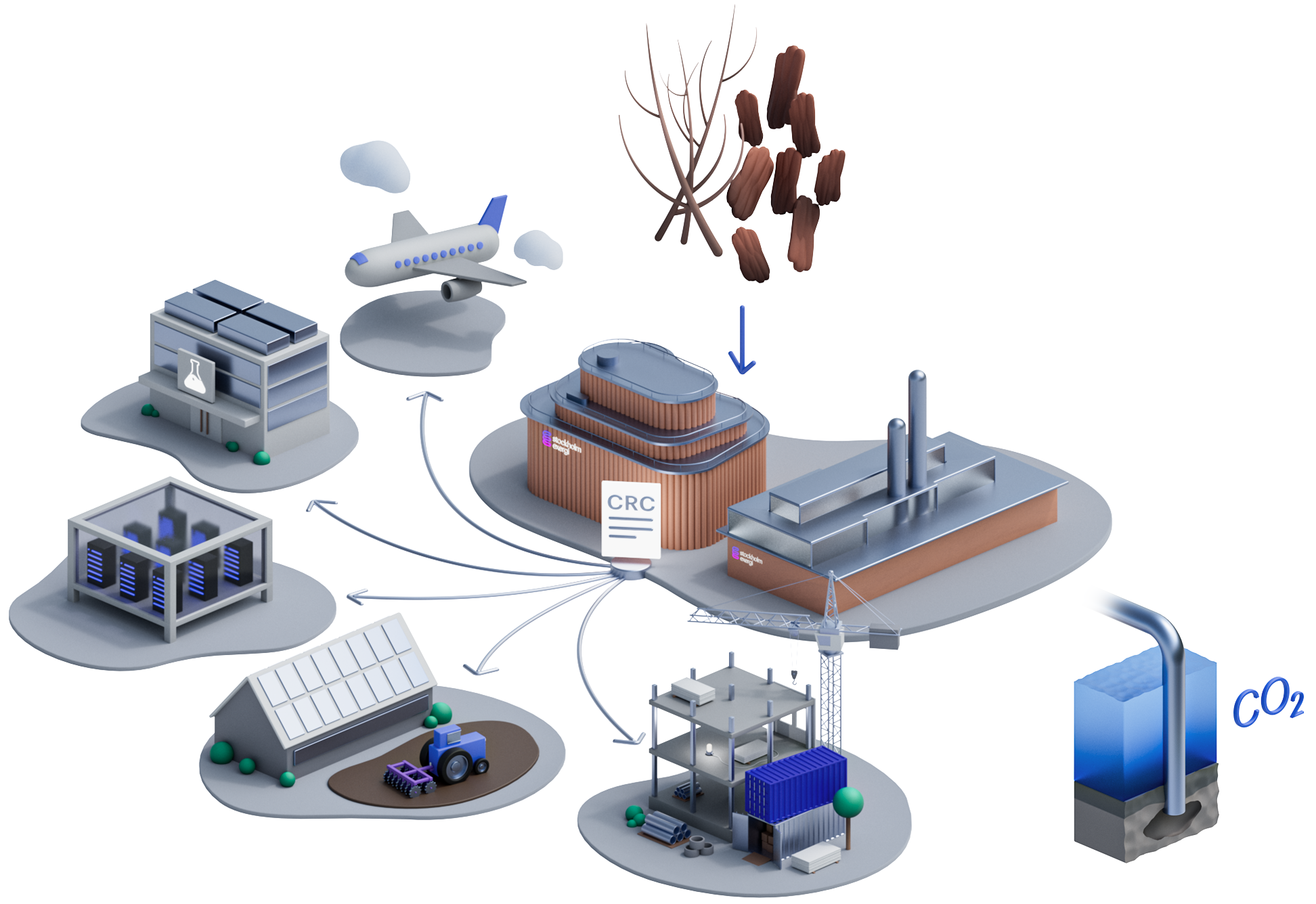
Image above: the market for permanent negative emissions